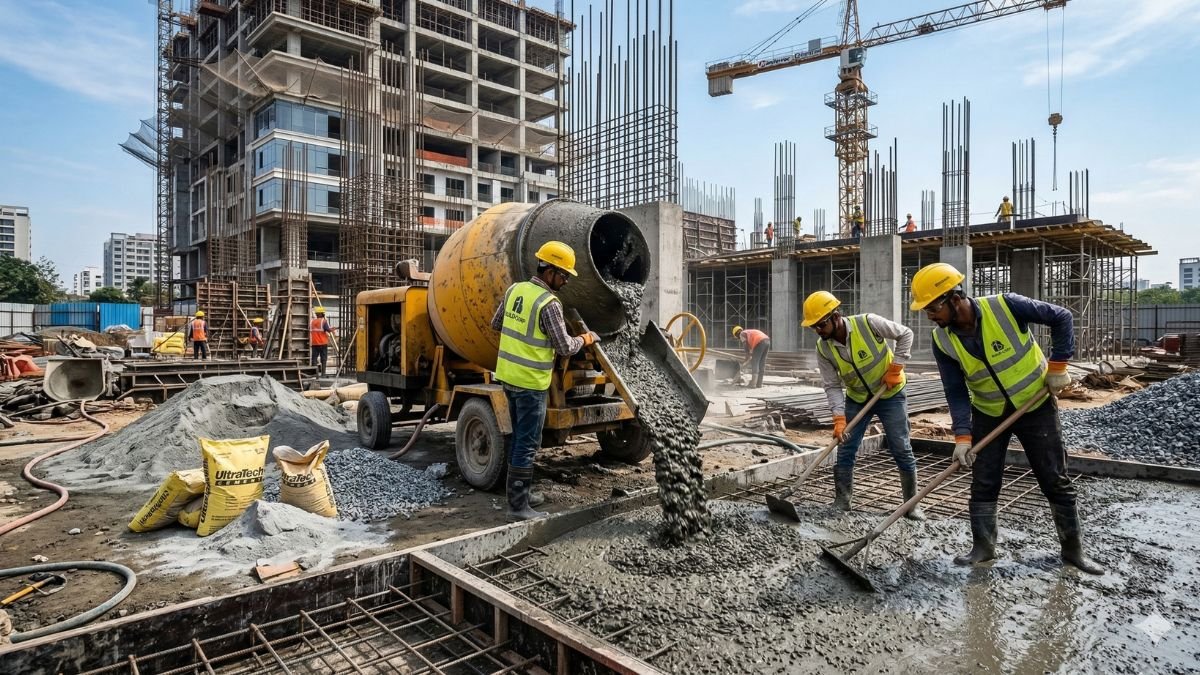
Wet Volume In Construction: Meaning, Formula, Calculation & Practical Guide
Introduction
In construction projects, accurate material calculation is extremely important. If the calculation is wrong, it can lead to material shortage, wastage, or weak structures. One of the key concepts used in construction estimation is Wet Volume.
Wet volume refers to the actual volume of concrete or mortar after water is added and the materials are properly mixed. When cement, sand, and aggregates are mixed with water, the mixture becomes compact and forms a usable construction material.
Civil engineers, contractors, and masons use wet volume calculations to determine how much concrete or mortar is required for slabs, columns, beams, brickwork, and plastering.
Understanding wet volume also helps in calculating the dry material quantities such as cement bags, sand, and aggregates needed for construction.
In this complete guide, you will learn:
- What wet volume means
- Why wet volume is important in construction
- The formula used to calculate it
- Step-by-step examples
- Wet volume vs dry volume difference
All explanations are written in simple and beginner-friendly language.
What Is Wet Volume?
Wet volume is the actual volume of concrete or mortar after mixing dry materials with water.
When materials like cement, sand, and aggregates are mixed together and water is added, the mixture fills the voids between particles and becomes compact. The final usable mixture is called wet volume.
Simple Definition
Wet Volume = Final Volume Of Concrete Or Mortar After Adding Water
This volume represents the material that will be placed in the structure.
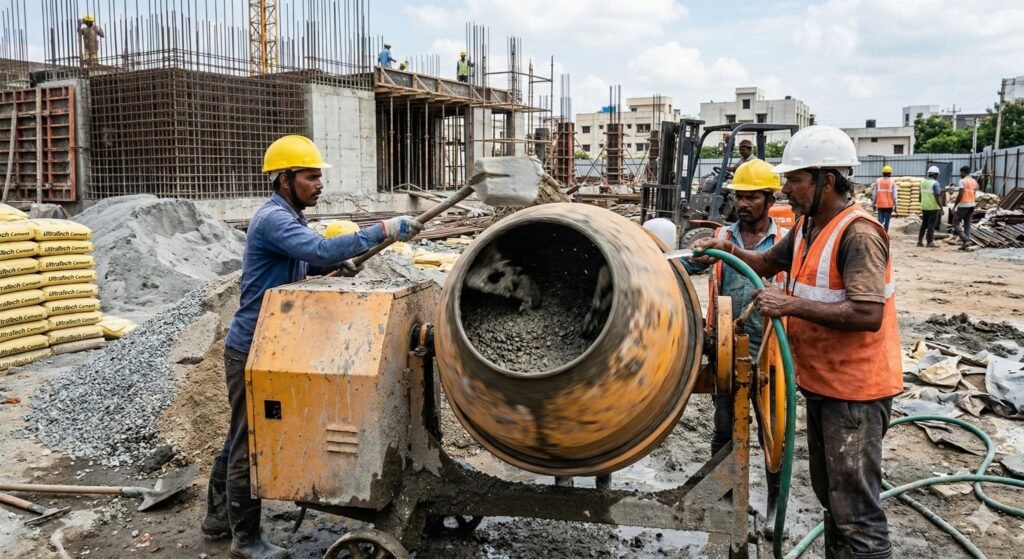
Why Wet Volume Is Important In Construction
Wet volume plays a very important role in construction estimation and material planning.
1. Accurate Material Estimation
Knowing the wet volume helps engineers determine the correct amount of:
- Cement
- Sand
- Aggregate
- Water
2. Cost Control
If the calculation is incorrect, it can result in:
- Material wastage
- Extra purchasing cost
- Construction delays
3. Structural Strength
Correct material proportion ensures the strength and durability of concrete structures.
4. Better Construction Planning
Builders can easily plan material transportation and storage at the construction site.
Wet Volume Formula
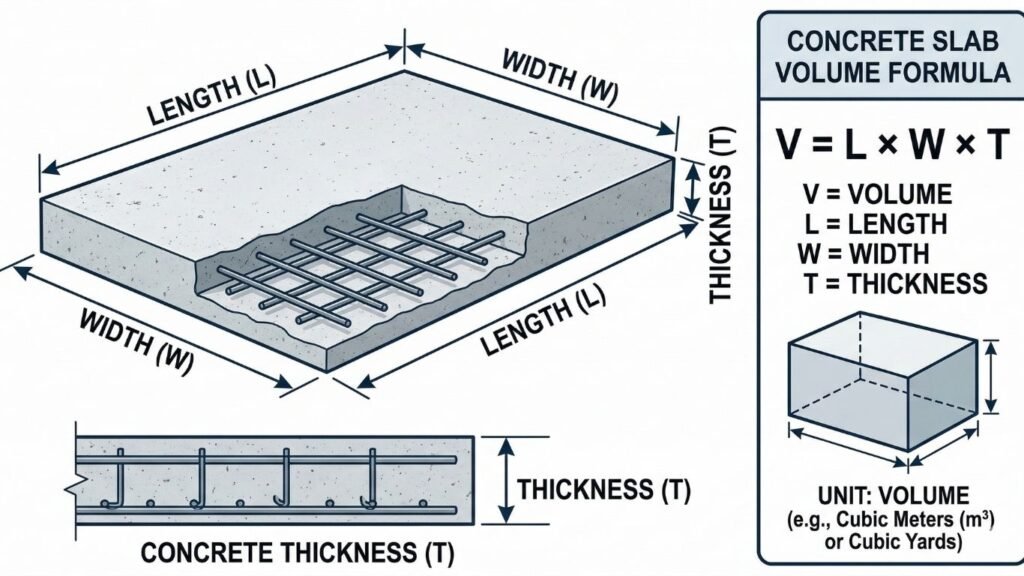
The wet volume of any structural element is calculated using its dimensions.
Basic Formula
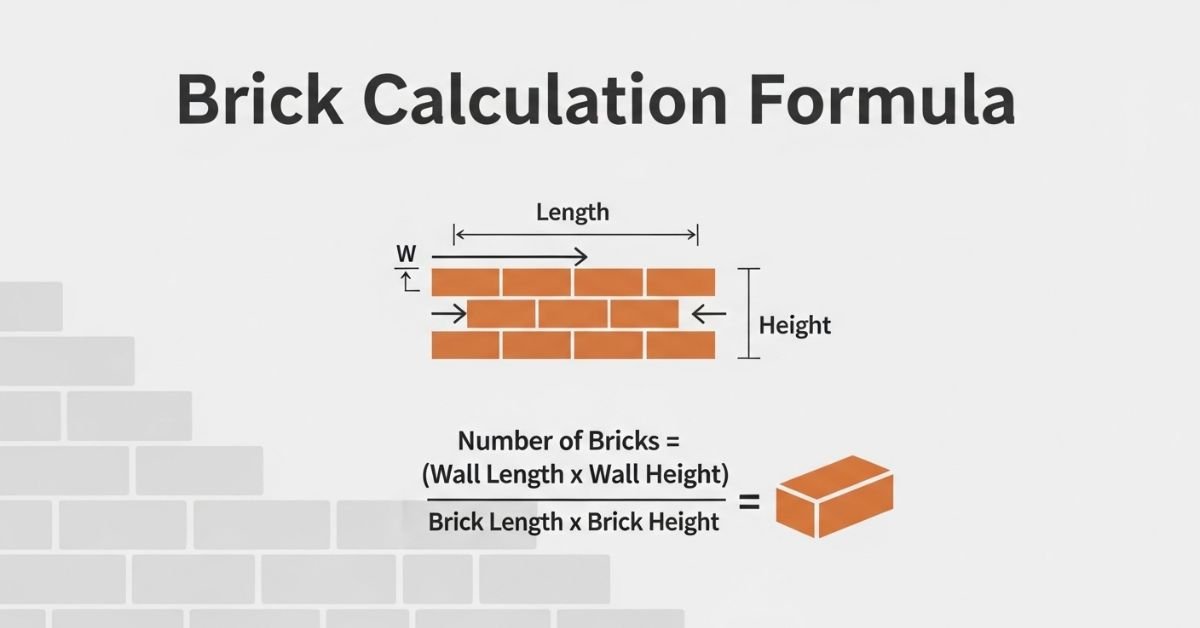
Wet Volume = Length × Width × Height
OR
Wet Volume = Area × Thickness
Where:
- Length = Structure length
- Width = Structure width
- Height/Thickness = Depth of the structure
Example Of Wet Volume Calculation
Let us understand the concept with a simple example.
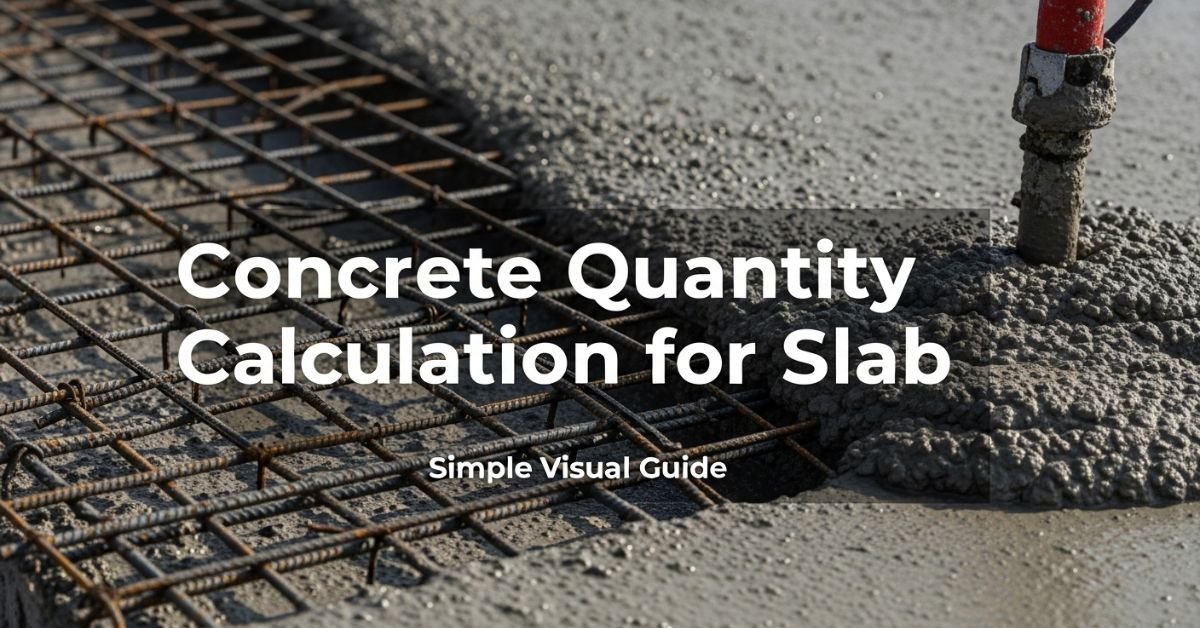
Example: Concrete Slab
Suppose we have a concrete slab with the following dimensions:
Length = 5 m
Width = 4 m
Thickness = 0.15 m
Step 1: Apply Formula
Wet Volume = Length × Width × Thickness
Wet Volume = 5 × 4 × 0.15
Wet Volume = 3 Cubic Meters
This means 3 m³ of concrete is required for the slab.
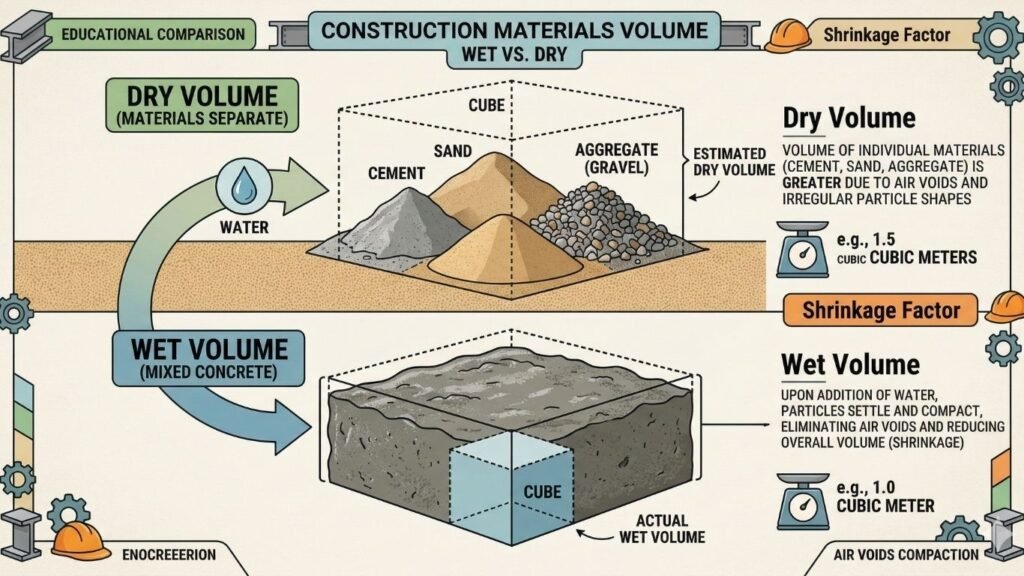
Wet Volume Vs Dry Volume
Many beginners confuse wet volume and dry volume.
Here is the difference.
| Parameter | Wet Volume | Dry Volume |
|---|---|---|
| Definition | Final mixture after water addition | Raw material volume before mixing |
| Condition | Compacted mixture | Loose materials |
| Usage | Used in construction | Used for material calculation |
Dry materials contain air gaps and voids, so extra material is needed.
Because of this:
Dry Volume = Wet Volume × 1.54
This factor accounts for:
- Voids between particles
- Material wastage
- Sand bulking
Wet Volume In Different Construction Works
Wet volume is used in many construction activities.
1. Concrete Work
Used for structures such as:
- Footings
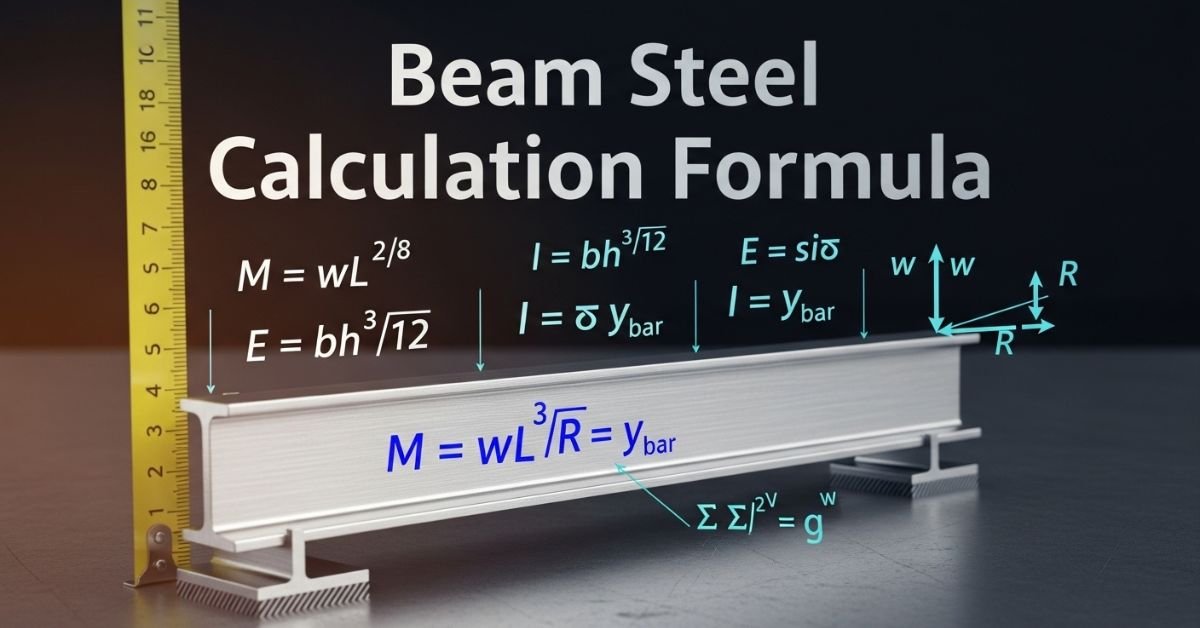
- Beams
- Columns
- Slabs
Typical mix ratio: 1 : 2 : 4
2. Brick Masonry
Mortar is used between bricks.
Common ratios:
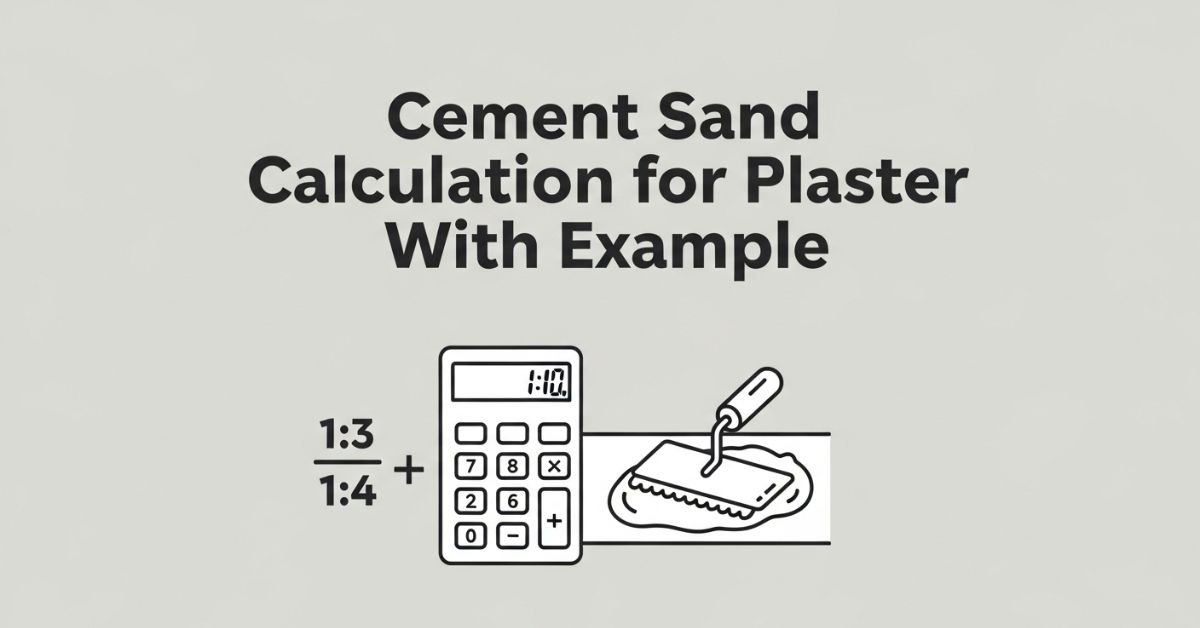
- 1 : 4
- 1 : 6
Wet volume helps determine mortar quantity required for brickwork.
3. Plastering Work
Plaster thickness usually ranges between:
- 12 mm
- 15 mm
- 20 mm
Wet volume helps calculate cement and sand requirements.
Step By Step Wet Volume Calculation Method
Follow these simple steps.
Step 1: Measure Dimensions
Measure:
- Length
- Width
- Thickness
Step 2: Calculate Wet Volume
Apply the formula:
Volume = Length × Width × Height
Step 3: Convert To Dry Volume
Multiply wet volume by the conversion factor.
For concrete:
Dry Volume = Wet Volume × 1.54
Step 4: Calculate Material Quantities
Use the mix ratio to determine:
- Cement bags
- Sand quantity
- Aggregate quantity
Example Concrete Mix Calculation
Suppose:
Wet Volume = 1 m³
Concrete mix ratio = 1 : 2 : 4
Step 1: Dry Volume
Dry Volume = 1 × 1.54
= 1.54 m³
Step 2: Total Ratio
1 + 2 + 4 = 7
Step 3: Cement Quantity
Cement Volume = 1/7 × 1.54
= 0.22 m³
1 bag cement = 0.035 m³
Cement Bags Required:
0.22 ÷ 0.035 ≈ 6.3 Bags
Common Mistakes In Wet Volume Calculation
Ignoring Conversion Factor
Many beginners forget to convert wet volume to dry volume.
Wrong Measurements
Incorrect dimensions can lead to inaccurate calculations.
Incorrect Mix Ratio
Using the wrong ratio can reduce the strength of concrete.
Not Considering Wastage
Construction always involves small material losses.
Advantages Of Understanding Wet Volume
Understanding wet volume provides several benefits.
Accurate Construction Planning
Builders can plan materials and manpower effectively.
Cost Savings
Proper calculations prevent unnecessary material purchases.
Improved Construction Quality
Correct mix proportions ensure strong and durable structures.
Faster Project Execution
Efficient estimation speeds up construction work.
Frequently Asked Questions (FAQs)
What Is Wet Volume In Construction?
Wet volume is the actual volume of concrete or mortar after mixing cement, sand, aggregates, and water.
Why Is Wet Volume Converted To Dry Volume?
Dry materials contain voids and air spaces, so additional materials are required to produce the desired wet mix.
What Is The Formula For Wet Volume?
Wet Volume = Length × Width × Height
What Is The Dry Volume Factor For Concrete?
The commonly used factor is:
Dry Volume = Wet Volume × 1.54
Is Wet Volume Larger Than Dry Volume?
No. Dry volume is usually greater than wet volume because it includes voids and wastage.
Conclusion
Wet volume is one of the most important concepts in construction estimation. It represents the actual volume of concrete or mortar mixture after water is added.
By calculating wet volume correctly, engineers and contractors can:
- Estimate construction materials accurately
- Reduce material wastage
- Ensure proper mix proportions
- Maintain structural quality
The formula Length × Width × Height makes it easy to determine wet volume for slabs, beams, columns, and other structures.
For accurate material estimation, wet volume must also be converted to dry volume using the appropriate factor.
Understanding this concept is essential for civil engineering students, contractors, builders, and site supervisors.