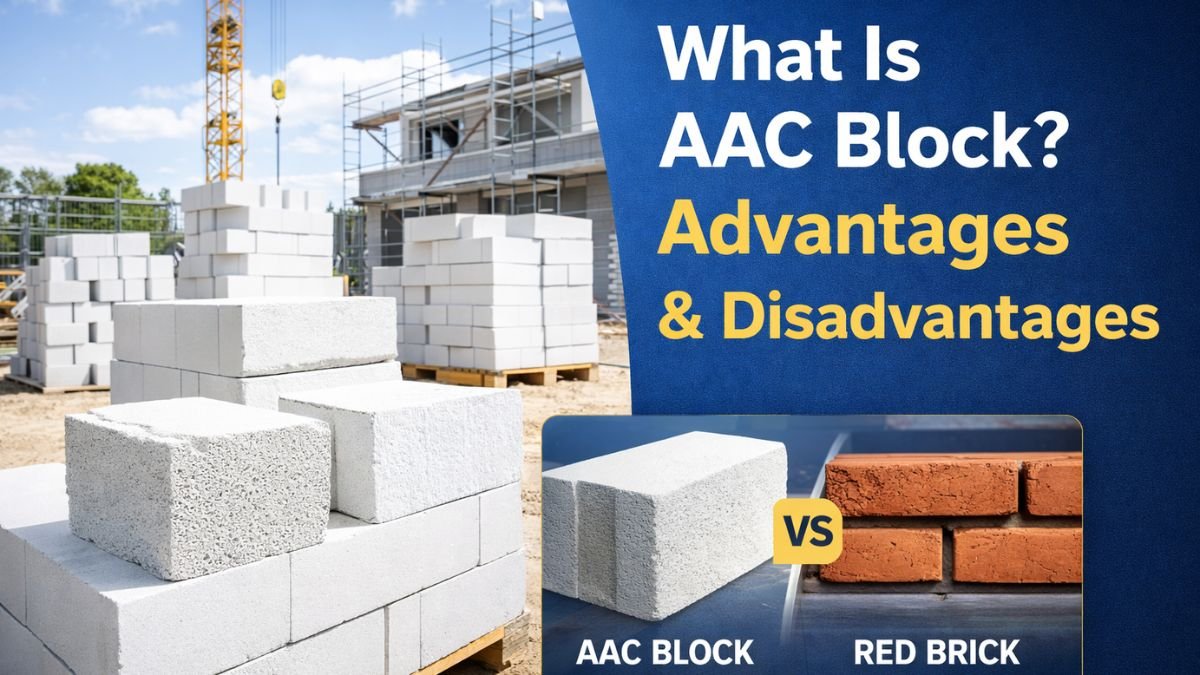
If You Are Planning To Build A House, You May Have Heard About AAC Blocks. But Many Beginners Still Ask What Is AAC Block? Advantages & Disadvantages Of Using It In Construction?
AAC Blocks Are Modern Building Materials That Are Replacing Traditional Red Bricks In Many Projects. They Are Lightweight, Strong, And Energy Efficient. In This Guide, I Will Explain Everything In Simple Language Including AAC Block Size, Benefits, Drawbacks, And Practical Use Cases.
What Is AAC Block ?
AAC Stands For Autoclaved Aerated Concrete. It Is A Lightweight, Precast Building Material Made From Cement, Lime, Sand, Gypsum, Water, And A Small Amount Of Aluminum Powder.
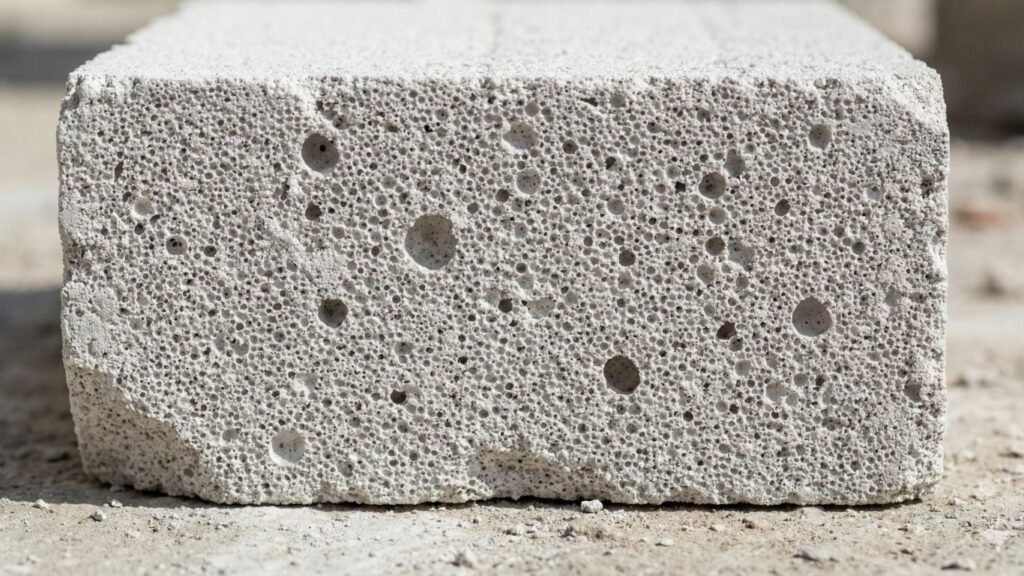
When Aluminum Powder Reacts With Other Ingredients, It Creates Tiny Air Bubbles Inside The Block. These Air Pockets Make The Block Lightweight And Provide Good Insulation.
After Mixing, The Material Is Cured In A High-Pressure Steam Chamber Called An Autoclave. This Process Makes The Block Strong And Durable.
AAC Block Size (Standard Dimensions)
Understanding AAC Block Size Is Important Before Using It In Construction.
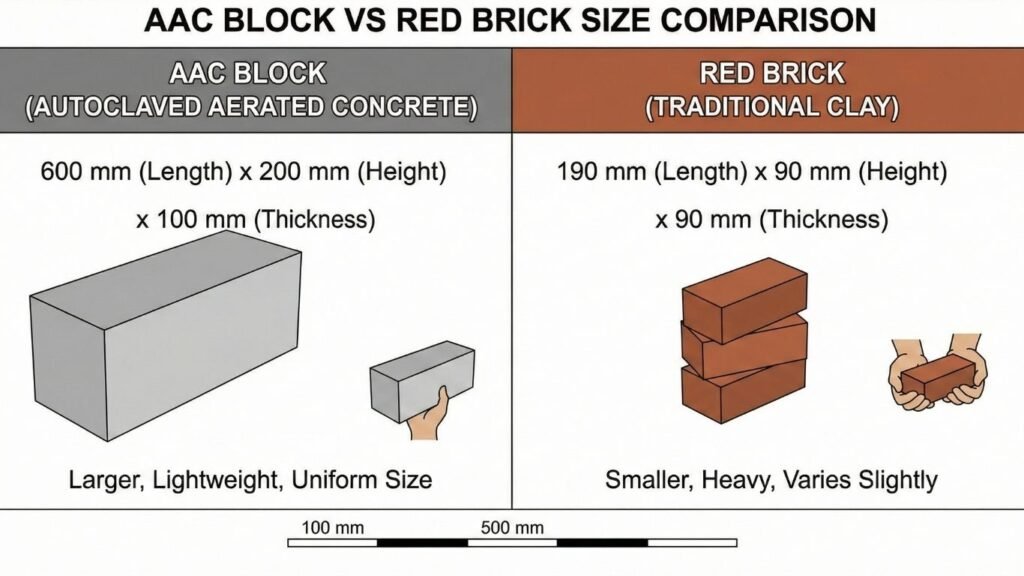
Common AAC Block Sizes In India:
- 600 mm × 200 mm × 100 mm
- 600 mm × 200 mm × 150 mm
- 600 mm × 200 mm × 200 mm
- 600 mm × 200 mm × 230 mm
Thickness Varies Depending On Wall Type:
- 100 mm – Internal Partition Walls
- 150 mm – Light Load Walls
- 200–230 mm – External Walls
AAC Blocks Are Larger Than Traditional Bricks, Which Reduces The Number Of Joints And Speeds Up Construction.
Advantages Of AAC Block
Now Let’s Understand The Major Benefits. This Section Explains What Is AAC Block? Advantages & Disadvantages In A Practical Way.
1. Lightweight Material
AAC Blocks Are About 3 Times Lighter Than Traditional Bricks.
This Reduces:
- Structural Load
- Foundation Cost
- Steel Requirement
Lighter Walls Mean Lower Overall Construction Cost.
2. Excellent Thermal Insulation
Due To Air Pockets Inside, AAC Blocks Keep Buildings Cooler In Summer And Warmer In Winter.
This Helps Reduce Electricity Bills.
3. Faster Construction
Since AAC Block Size Is Larger Than Bricks:
- Fewer Blocks Are Required
- Less Mortar Is Used
- Labour Work Is Faster
Projects Get Completed Quickly.
4. Fire Resistance
AAC Blocks Can Resist Fire For Up To 4–6 Hours Depending On Thickness.
This Makes Them Safer For Residential And Commercial Buildings.
5. Sound Insulation
The Air Structure Inside AAC Blocks Reduces Noise Transmission.
This Is Very Helpful In Apartments And Office Buildings.
6. Eco-Friendly Material
AAC Blocks Use Industrial Waste Like Fly Ash.
They Are Environment-Friendly And Produce Less Construction Waste.
Disadvantages Of AAC Block
While AAC Blocks Have Many Benefits, It Is Important To Know The Drawbacks.
1. Higher Initial Cost
AAC Blocks Cost More Per Piece Compared To Red Bricks.
However, The Overall Project Cost May Balance Out Due To Reduced Cement And Steel Usage.
2. Special Mortar Required
AAC Blocks Require Thin Bed Mortar Or Adhesive Instead Of Traditional Cement Mortar.
This Slightly Increases Material Cost.
3. Limited Load Bearing Capacity
AAC Blocks Are Not Suitable For Heavy Load-Bearing Structures Without Proper Design.
They Are Mostly Used For:
- Partition Walls
- Non-Load Bearing Walls
4. Skilled Labour Required
Proper Installation Requires Trained Workers.
If Not Installed Correctly, Cracks May Develop.
AAC Block Vs Red Brick
Let’s Compare Quickly:
| Feature | AAC Block | Red Brick |
|---|---|---|
| Weight | Lightweight | Heavy |
| Size | Larger | Smaller |
| Insulation | High | Low |
| Construction Speed | Fast | Slow |
| Cost | Higher Per Block | Lower Per Brick |
AAC Blocks Provide Better Modern Performance, While Bricks Are Traditional And Widely Available.
Where Are AAC Blocks Used ?
AAC Blocks Are Commonly Used In:
- Residential Buildings
- Commercial Complexes
- Hospitals
- Schools
- High-Rise Buildings
They Are Ideal For Partition Walls And Exterior Walls In Frame Structures.
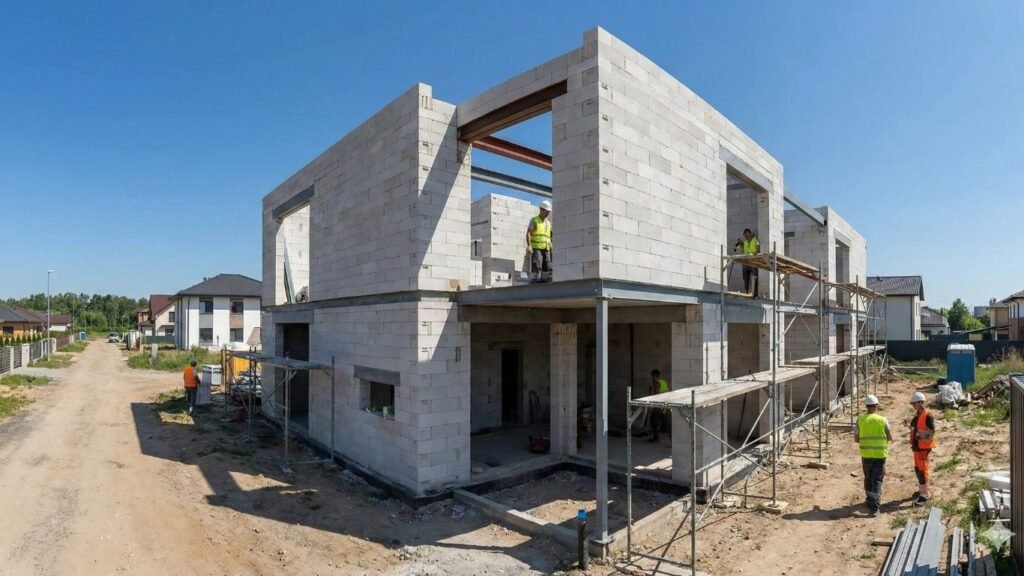
Is AAC Block Good For House Construction ?
Yes, AAC Blocks Are A Good Choice For Modern Homes.
They:
- Reduce Structural Load
- Improve Energy Efficiency
- Provide Better Comfort
- Speed Up Construction
However, Proper Planning And Skilled Labour Are Important.
Cost Consideration Of AAC Blocks
Although AAC Blocks Appear Costly At First, Consider These Savings:
- Less Cement Mortar
- Reduced Steel Requirement
- Lower Plaster Thickness
- Faster Labour Completion
When Calculated Properly, Total Construction Cost Can Be Competitive.
Final Verdict Should You Choose AAC Block ?
If You Are Looking For:
- Lightweight Construction
- Energy Efficiency
- Faster Completion
- Modern Building Material
AAC Blocks Are A Smart Choice.
But If Your Budget Is Extremely Tight And Skilled Labour Is Not Available, Traditional Bricks May Be Easier.
Understanding What Is AAC Block ? Advantages & Disadvantages Helps You Make The Right Decision Based On Your Project Needs.
Conclusion
AAC Blocks Are Modern, Lightweight, And Energy Efficient Building Materials. They Offer Many Advantages Like Faster Construction, Thermal Insulation, And Fire Resistance.
However, They Also Have Some Disadvantages Such As Higher Initial Cost And Special Installation Requirements.
Before Choosing AAC Blocks, Evaluate Your Project Budget, Design, And Location.
With Proper Planning, AAC Blocks Can Significantly Improve Construction Quality.
Frequently Asked Questions (FAQ)
Q1: What Is AAC Block Made Of ?
AAC Block Is Made Of Cement, Lime, Sand, Gypsum, Water, And Aluminum Powder.
Q2: What Is Standard AAC Block Size ?
Common AAC Block Size Is 600 mm × 200 mm With Different Thickness Options.
Q3: Are AAC Blocks Stronger Than Bricks ?
They Are Strong Enough For Partition Walls But Not Always Suitable For Heavy Load-Bearing Structures.
Q4: Is AAC Block Expensive ?
The Initial Cost Is Higher Than Red Brick, But Overall Construction Cost May Reduce.
Q5: Is AAC Block Good For Home Construction ?
Yes, AAC Blocks Are Suitable For Modern Homes Due To Insulation And Lightweight Properties.