
When It Comes To Construction Projects, Good Planning Makes A Huge Difference. One Of The Things Engineers And Site Managers Always Try To understand early is Construction Site Capacity.
In simple terms, construction site capacity tells us how much work a site can actually handle efficiently. This includes workers, machines, materials, and the time available for construction.
If site capacity is not planned properly, several problems can happen. For example:
- Too many workers crowded in one place
- Equipment blocking work areas
- Materials not stored properly
- Work slowing down unexpectedly
But when construction site capacity is calculated correctly, everything becomes easier to manage. The workflow becomes smoother, productivity improves, and the project can move forward without unnecessary delays.
In this guide, we’ll walk through how to calculate construction site capacity using simple civil calculation formulas. Everything is explained in easy language so beginners and civil engineering students can follow along comfortably.
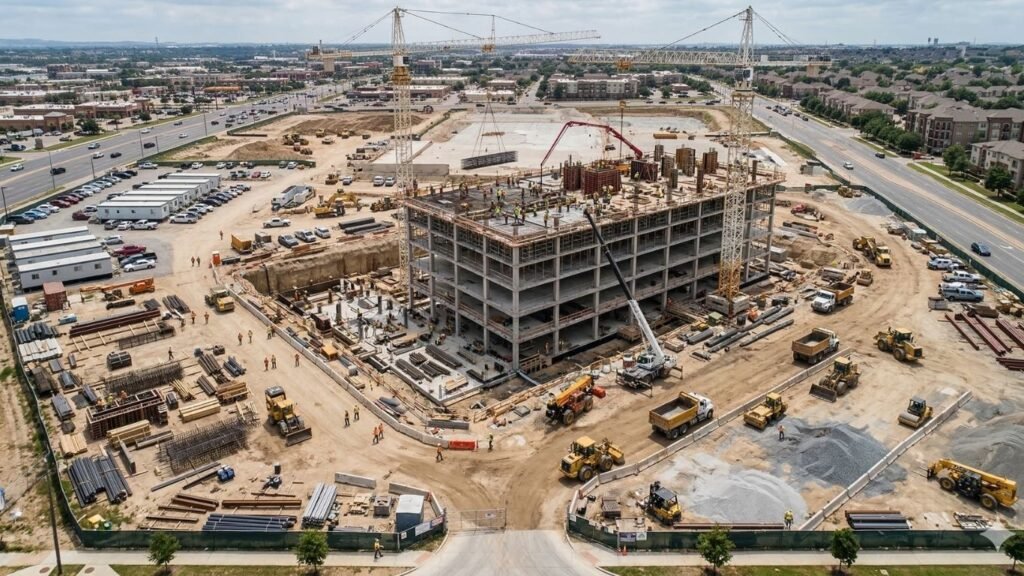
What Is Construction Site Capacity ?
Construction Site Capacity Means The Maximum Amount Of Work A Construction Site Can Handle Efficiently Within A Certain Period Of Time.
It Basically Depends On The Resources Available On The Site, Such As:
- Workers
- Machines
- Construction Materials
- Available Working Time
To Put It Simply, Construction Site Capacity Answers One Important Question:
How Much Work Can Be Completed On This Site In One Day Or One Week?
For example, a construction site might have the capacity to complete:
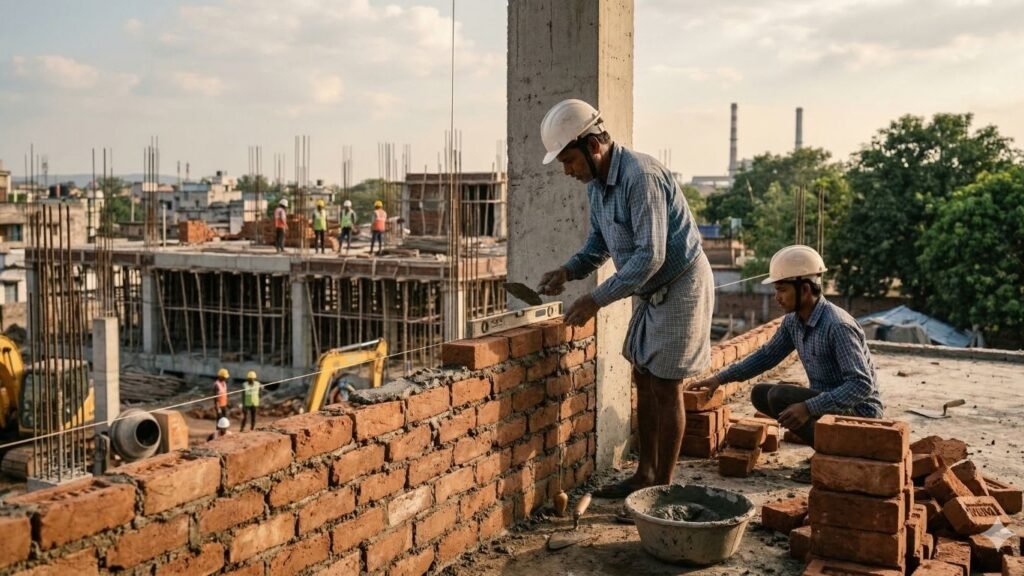
- 150 m² Of Brickwork Per Day
- 40 m³ Of Concrete Work Per Day
- 300 m² Of Plastering Work Per Day
Of course, these numbers vary depending on the site conditions and resources available.
Main Factors Affecting Construction Site Capacity
Several different factors influence how much work a construction site can handle.
Site Area
The Size Of The Construction Site Is One Of The First Things To Consider.
A Larger Site Provides More Space For:
- Equipment Movement
- Worker Activity
- Material Storage
If the site is too small, congestion can occur and productivity may drop.
Labor Productivity
Workers are the heart of any construction project. Their productivity directly affects how much work gets done.
For example:
- A Mason May Build Around 2 m² Of Brickwork Per Hour
- A Concrete Crew May Pour 4–5 m³ Of Concrete Per Hour
Better productivity naturally increases the overall site capacity.
Construction Equipment
Machines can significantly speed up construction work.
Common equipment affecting site capacity includes:
- Excavators
- Cranes
- Concrete Mixers
- Dump Trucks
With proper equipment planning, work becomes faster and more efficient.
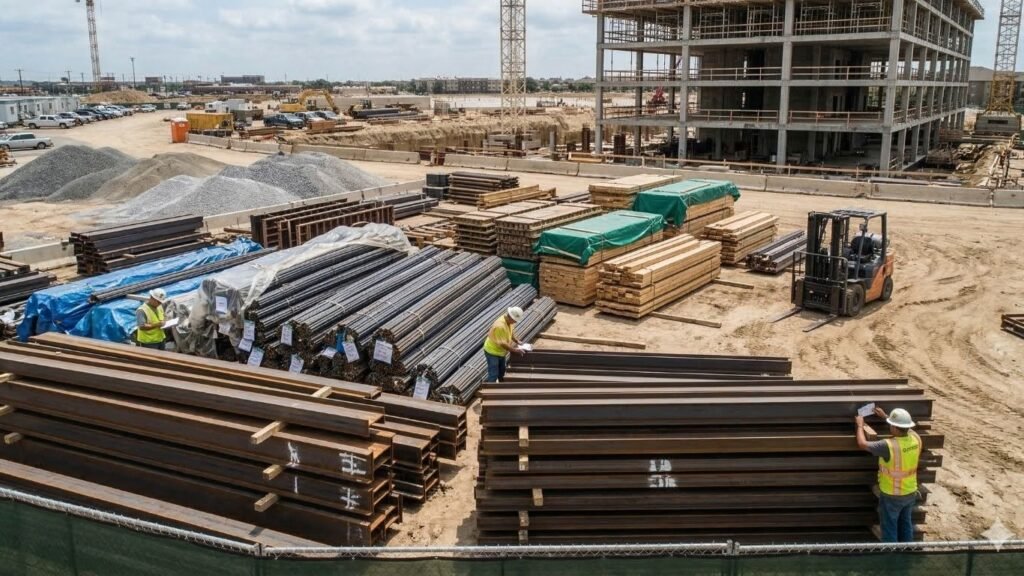
Material Storage Area
Construction sites must also have enough space to store materials like:
- Cement
- Sand
- Bricks
- Steel
- Aggregates
Without proper storage space, materials may arrive late or create clutter on the site.
Construction Site Capacity Formula
Engineers usually estimate construction capacity using a simple productivity formula.
Site\ Capacity = Productivity \times Number\ of\ Workers \times Time
Where:
Productivity = Work Done By One Worker Per Hour
Number Of Workers = Total Workers Available On Site
Time = Total Working Hours
This formula helps estimate the maximum possible work output of a construction site.
Example Of Construction Site Capacity Calculation
Let’s take a very simple example to understand this better.
Suppose A Construction Site Has:
- 10 Workers
- Each Worker Builds 2 m² Of Brick Wall Per Hour
- Working Hours Per Day = 8 Hours
Step 1: Calculate Daily Productivity Per Worker
2 × 8 = 16 m² Per Day
Step 2: Calculate Total Site Capacity
16 × 10 = 160 m² Per Day
So, the site has the capacity to complete:
160 Square Meters Of Brickwork In One Day
That’s how engineers estimate daily construction productivity.
Material Storage Capacity Formula
Material storage also plays an important role in determining site capacity.
The formula used for calculating storage capacity is:
Material\ Storage\ Capacity = Area \times Height
Where:
Area = Length × Width Of Storage Space
Height = Maximum Safe Stacking Height
Example Of Material Storage Capacity
Suppose The Storage Area Has The Following Dimensions:
Length = 10 m
Width = 5 m
Stack Height = 2 m
Step 1: Calculate Storage Area
10 × 5 = 50 m²
Step 2: Calculate Storage Capacity
50 × 2 = 100 m³
This Means The Construction Site Can Store 100 Cubic Meters Of Materials.
Steps To Calculate Construction Site Capacity
If you want to calculate site capacity for a real project, follow these steps.
Step 1: Measure Construction Site Area
First, determine how much space is available for:
- Work Areas
- Equipment Movement
- Material Storage
Step 2: Estimate Worker Productivity
Determine how much work a worker can complete per hour or per day.
Step 3: Identify Available Resources
Count the number of:
- Workers
- Machines
- Equipment
Step 4: Calculate Total Work Output
Multiply productivity, number of workers, and working hours.
This will give you a reasonable estimate of site capacity.
Benefits Of Calculating Construction Site Capacity
Understanding construction site capacity provides many advantages.
- Better Construction Planning
- Higher Worker Productivity
- Reduced Project Delays
- Efficient Equipment Usage
- Improved Site Safety
When engineers plan site capacity correctly, the construction process becomes much more organized.
Common Mistakes In Construction Site Planning
Sometimes site managers make mistakes that reduce productivity.
Some common issues include:
- Overcrowded work areas
- Poor equipment placement
- Insufficient material storage
- Ignoring safety zones
Avoiding these mistakes can greatly improve construction efficiency.
Conclusion
Construction Site Capacity Is An Important Concept In Civil Engineering And Construction Management. It helps engineers understand how much work a construction site can handle efficiently.
By using simple civil calculation formulas based on productivity, number of workers, and time, site managers can estimate the work output of a project.
For beginners, learning how to calculate site capacity is extremely useful. It improves planning, increases productivity, and helps ensure construction projects are completed smoothly and safely.
Frequently Asked Questions (FAQ)
What Is Construction Site Capacity ?
Construction Site Capacity Is The Maximum Amount Of Work A Construction Site Can Complete Efficiently Using Available Labor, Equipment, And Time.
Why Is Construction Site Capacity Important?
It Helps Engineers Plan Labor, Materials, And Equipment Efficiently While Preventing Site Congestion And Project Delays.
What Is The Formula For Construction Site Capacity?
The Formula Is:
Site Capacity = Productivity × Number Of Workers × Time
What Factors Affect Construction Site Capacity?
Site Area, Worker Productivity, Equipment Availability, And Material Storage Space Are The Main Factors.
Can Site Capacity Affect Project Completion Time?
Yes. A Site With Higher Capacity Can Complete Construction Work Faster.
Also See Our Tools 👉 https://www.civilcost.com/tools/