
Dry Volume of Concrete Simple Explanation and Calculation Formula for Beginners
Learn what dry volume of concrete means and why it matters for accurate material ordering. This simple guide for beginners explains the 1.54 factor, step by step calculations, real examples, and tips to avoid costly mistakes on your construction project.
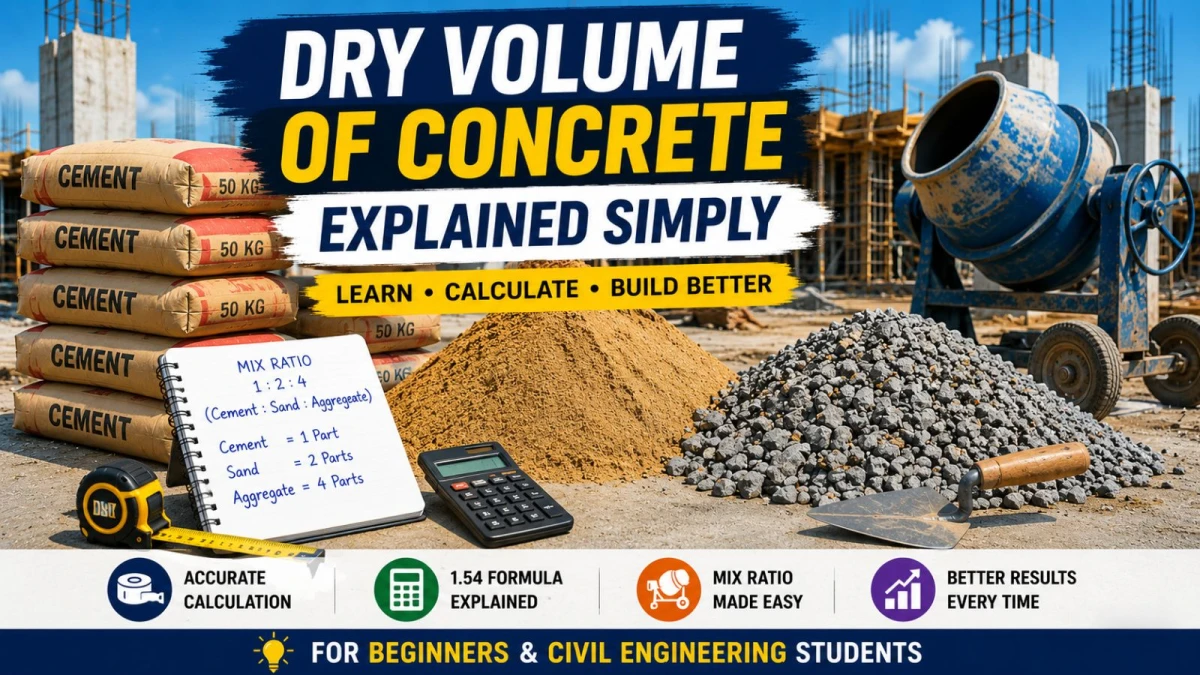
Starting a construction project can feel overwhelming, especially when it comes to ordering the right amounts of materials. One key concept every beginner needs to know is dry volume of concrete. Getting this right helps you buy the correct quantities of cement, sand, and aggregate without wasting money or running short.
In this guide, we'll explain everything in plain, simple terms. You'll learn the basic formula, see real examples, and pick up practical tips you can use right away.
What Is Dry Volume of Concrete ?
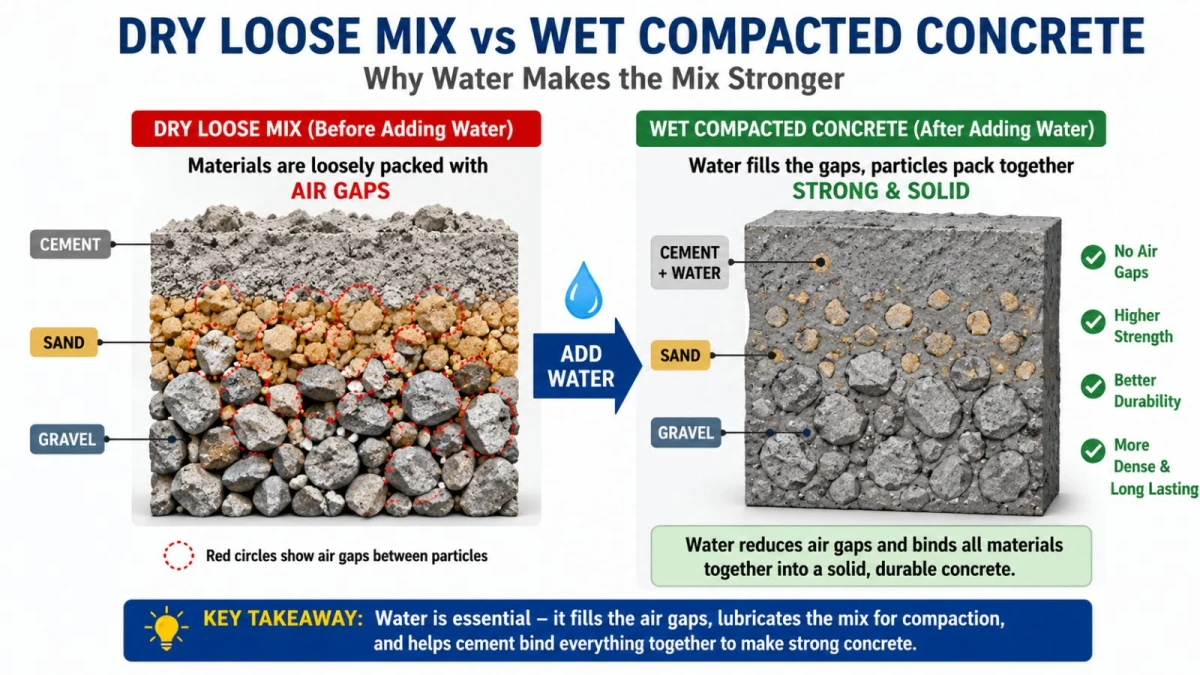
Dry volume of concrete refers to the total volume of all the dry ingredients cement, sand, and coarse aggregate before you add water.
When these materials sit together in their dry state, there are small air gaps and voids between the particles. Once you mix in water, those gaps get filled, and the overall volume shrinks. That's why the dry volume is always larger than the final wet concrete volume.
Wet Volume vs Dry Volume: What's the Difference ?
- Wet Volume: This is the actual volume of the finished concrete after mixing with water. It's what you measure in the structure, like the size of your slab or beam.
- Dry Volume: The larger volume of loose dry materials needed to produce that wet concrete.
The standard factor used in construction is 1.54. This means you need 1.54 cubic meters of dry materials to get 1 cubic meter of wet concrete.
This 54% extra accounts for voids in the mix and a bit of wastage during handling.
Why Do You Need to Calculate Dry Volume ?
Accurate calculation prevents two big problems:
- Ordering too little material and facing delays
- Ordering too much and wasting money on extra cement and aggregates
Proper estimation also helps maintain the correct mix ratio, which directly affects the strength of your concrete structure.
The Basic Formula for Dry Volume of Concrete
Dry Volume = Wet Volume × 1.54
This is the most common formula used on sites for normal concrete mixes.
For mortar (used in brickwork or plaster), people often use 1.33 instead of 1.54 because mortar has finer particles and different void percentages.
Step by Step How to Calculate Dry Volume
- Calculate the Wet Volume Measure the dimensions of your structure and multiply: Length × Width × Thickness (or Depth).
- Convert to Dry Volume Multiply the wet volume by 1.54.
- Determine Mix Ratio Common ratios include 1:2:4 or 1:1.5:3 for different grades.
- Calculate Individual Materials Divide the dry volume according to the mix ratio parts.
- Convert to Practical Units Turn volumes into number of cement bags, cubic feet of sand, etc.
Real Life Example Slab Calculation
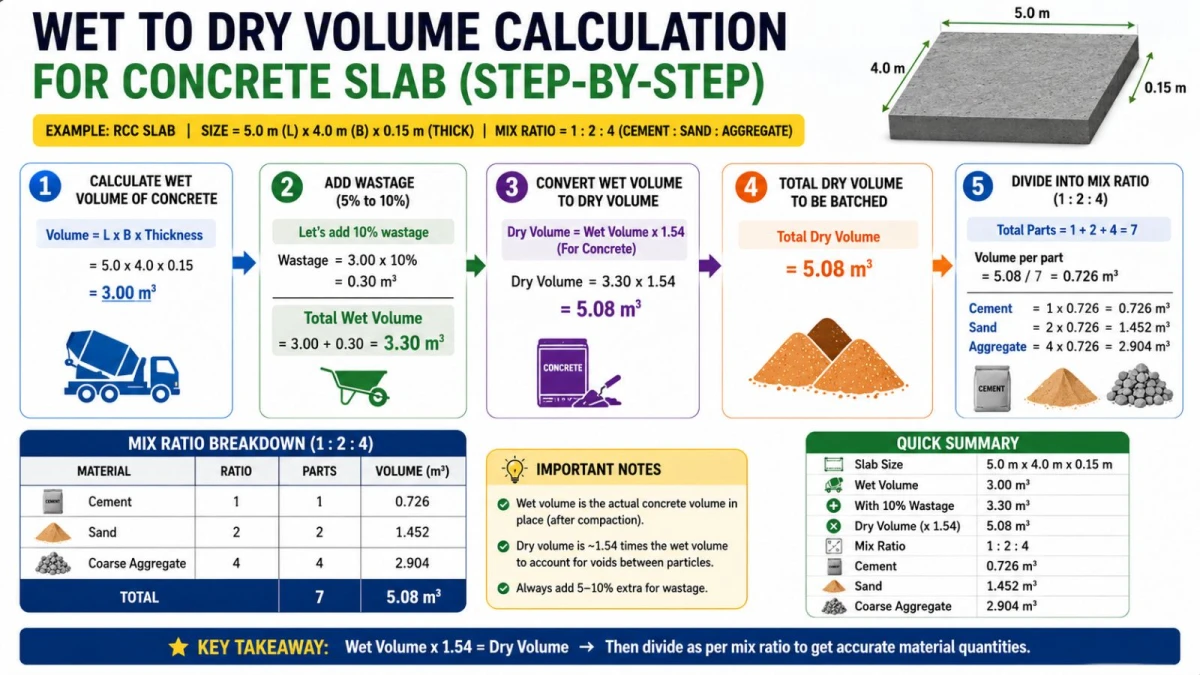
Suppose you are pouring a small concrete slab for a room: 5 meters long, 4 meters wide, and 0.15 meters thick.
Step 1: Wet Volume 5 m × 4 m × 0.15 m = 3 cubic meters
Step 2: Dry Volume 3 m³ × 1.54 = 4.62 cubic meters
Step 3: Using M20 Grade Mix (1:1.5:3) Total parts = 1 + 1.5 + 3 = 5.5
- Cement = (1/5.5) × 4.62 ≈ 0.84 m³ Number of 50kg bags ≈ 24 bags (since 1 bag ≈ 0.035 m³)
- Sand = (1.5/5.5) × 4.62 ≈ 1.26 m³
- Aggregate = (3/5.5) × 4.62 ≈ 2.52 m³
This simple process helps you order the right quantities.
Dry Volume for Different Concrete Elements
Different parts of a building need slightly different approaches:
For Columns and Beams Use the same 1.54 factor but be extra careful with dimensions since these are smaller but critical structural members.
For Foundations Often larger volumes always add a small percentage extra for uneven ground.
For Flooring or DPC Thinner layers require precise thickness measurement.
Common Mistakes Beginners Make
- Using wet volume directly for material orders
- Forgetting to apply the 1.54 factor
- Not adjusting for different mix grades
- Ignoring wastage on site (usually 2-5% extra is wise)
- Mixing up dry volume factors between concrete and mortar
Avoiding these errors saves both time and money.
Practical Tips to Improve Your Calculations
- Always double-check measurements twice.
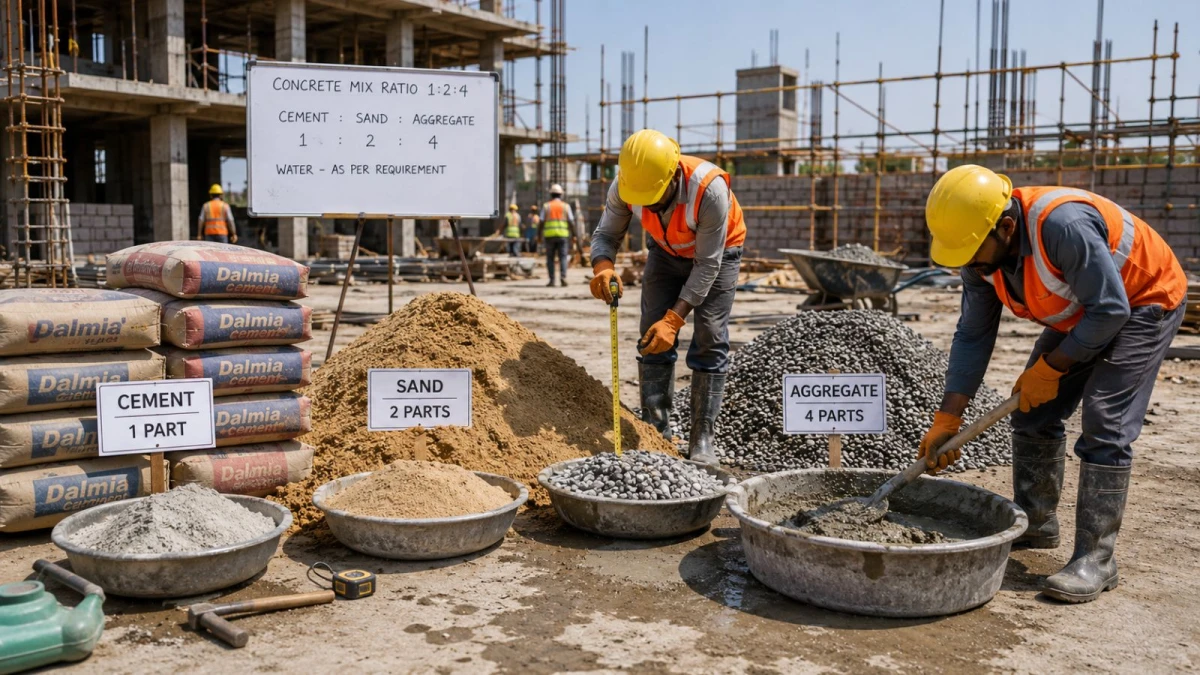
- Use standard mix ratios from reliable sources for your project type.
- Keep a small buffer for wastage.
- Consider using online calculators for quick verification, but understand the formula first.
- Record your calculations for future reference on similar jobs.
With practice, you'll get faster and more confident at estimating materials.
How Dry Volume Affects Concrete Strength
Getting the dry volume right ensures the correct proportions of ingredients. Too little cement or wrong sand-aggregate balance can lead to weak concrete that cracks easily. Proper calculation supports good quality and durability.
Conclusion
Understanding dry volume of concrete is a fundamental skill for anyone starting in construction. The simple 1.54 factor helps bridge the gap between your planned structure size and the materials you need to order. Start with small projects to build your confidence, and always measure carefully. This knowledge will help you plan better, reduce waste, and create stronger structures.
Frequently Asked Questions

Prince Badaik Is The Founder And Editor Of Civil Cost. He Writes About Civil Engineering, Construction Techniques, Building Materials, Architecture, Home Improvement, And Infrastructure Developments. His Goal Is To Simplify Complex Construction Topics And Provide Practical Information For Engineers, Contractors, Builders, And Homeowners.

Comments (0)