
How to Calculate Construction Site Capacity in 2026 (Simple Formula)
Learn how to calculate construction site capacity in simple steps. This beginner-friendly guide explains the basic formula, key factors, and real examples to help you plan your construction project better and avoid common mistakes.
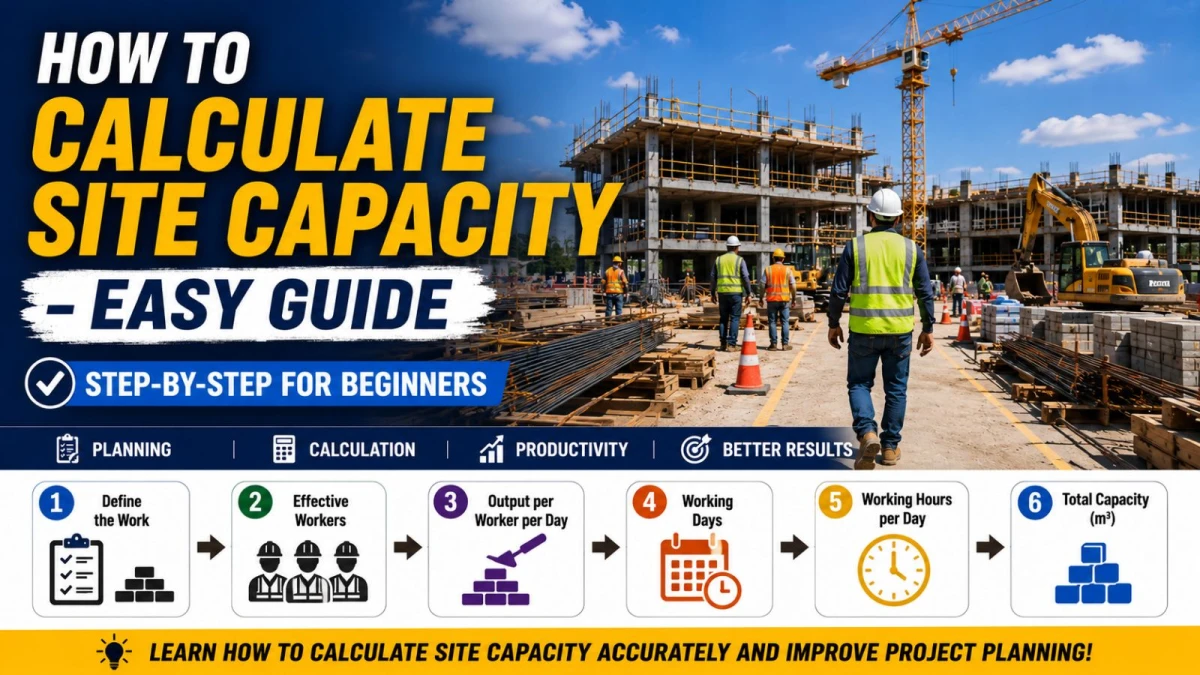
How to Calculate Construction Site Capacity Simple Formula for Beginners
If you're new to construction, one of the first things you need to figure out is how much work your site can actually handle. Calculating construction site capacity helps you plan workers, equipment, and time so the project runs smoothly without overcrowding or delays.
In this guide, we'll break it down step by step using simple language and examples. No complicated math – just practical info you can use right away.
What Is Construction Site Capacity ?
Construction site capacity is the maximum amount of work a site can complete efficiently in a given time using the available workers, machines, and space.
Think of it like this: How many square meters of brickwork or cubic meters of concrete can your team finish in one day? Knowing this number prevents problems like too many people getting in each other's way or running out of materials.
Why Should You Calculate It ?
Good capacity planning leads to:
- Fewer delays
- Better use of workers and equipment
- Safer working conditions
- Lower costs
Without it, sites often face congestion, wasted time, and frustrated teams.
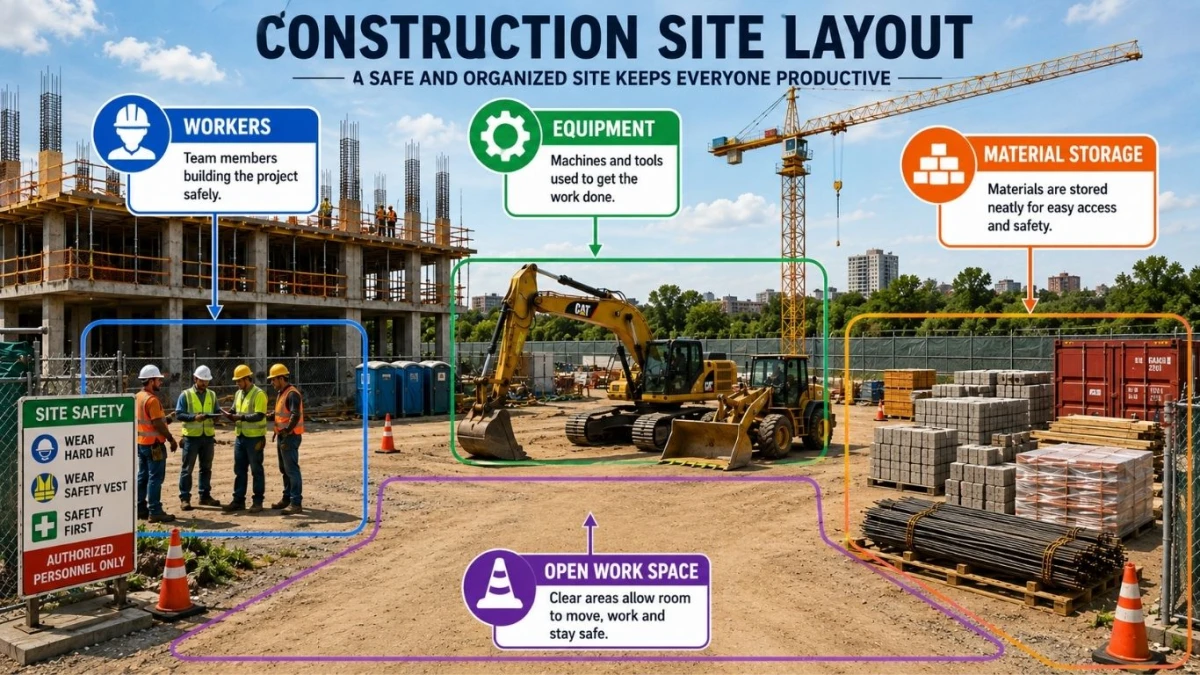
Main Factors That Affect Site Capacity
Several things influence how much work you can get done
- Site Area: Bigger sites give more room for movement and storage.
- Number of Workers: More skilled hands usually mean more output, but only up to a point.
- Worker Productivity: How much one person can do per hour or day (varies by task and experience).
- Equipment: Machines like mixers or cranes speed things up.
- Material Storage: Enough space to keep supplies handy without clutter.
- Working Hours: Standard 8-hour days, plus any breaks or weather issues.
Other real-world factors include weather, site access, and team coordination.
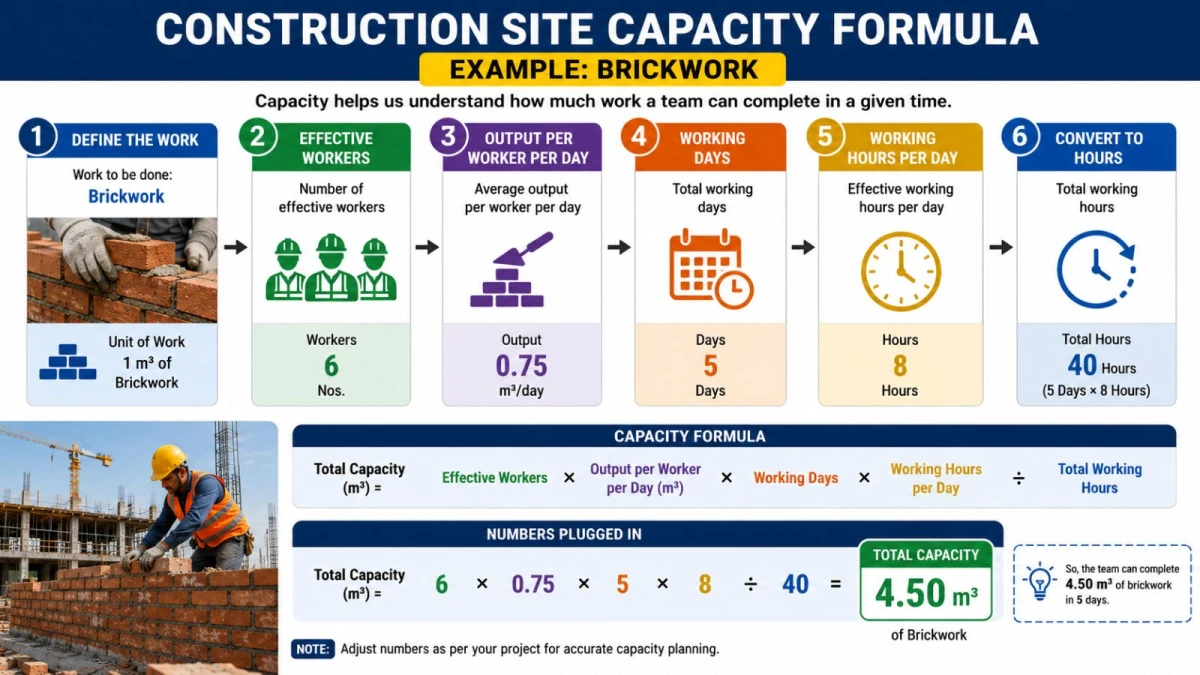
The Basic Construction Site Capacity Formula
The simple formula most people use is:
Site Capacity = Productivity × Number of Workers × Working Time
- Productivity = Work done by one worker per hour (example: 2 m² of brickwork per hour)
- Number of Workers = Total people available for that task
- Working Time = Hours per day (usually 8)
This gives you the daily output for a specific activity.
Step by Step How to Calculate Construction Site Capacity
- Measure Your Site Walk the site and note total area available for work, storage, and movement.
- Choose a Task Pick one activity, like bricklaying or concreting.
- Find Productivity Rate Use standard rates or observe your team. Example: A mason might lay 1.5–2.5 m² of bricks per hour.
- Count Resources Note number of workers and available hours.
- Apply the Formula Multiply the numbers to get daily capacity.
- Adjust for Reality Reduce the number slightly for breaks, weather, or unexpected issues.
Real Example for Beginners
Let's say you're doing brickwork on a small residential site:
- 8 workers
- Each worker builds 2 m² per hour
- 8 working hours per day
Daily capacity = 2 m²/hour × 8 workers × 8 hours = 128 m² per day
This means your site can handle about 128 square meters of brickwork daily under normal conditions.
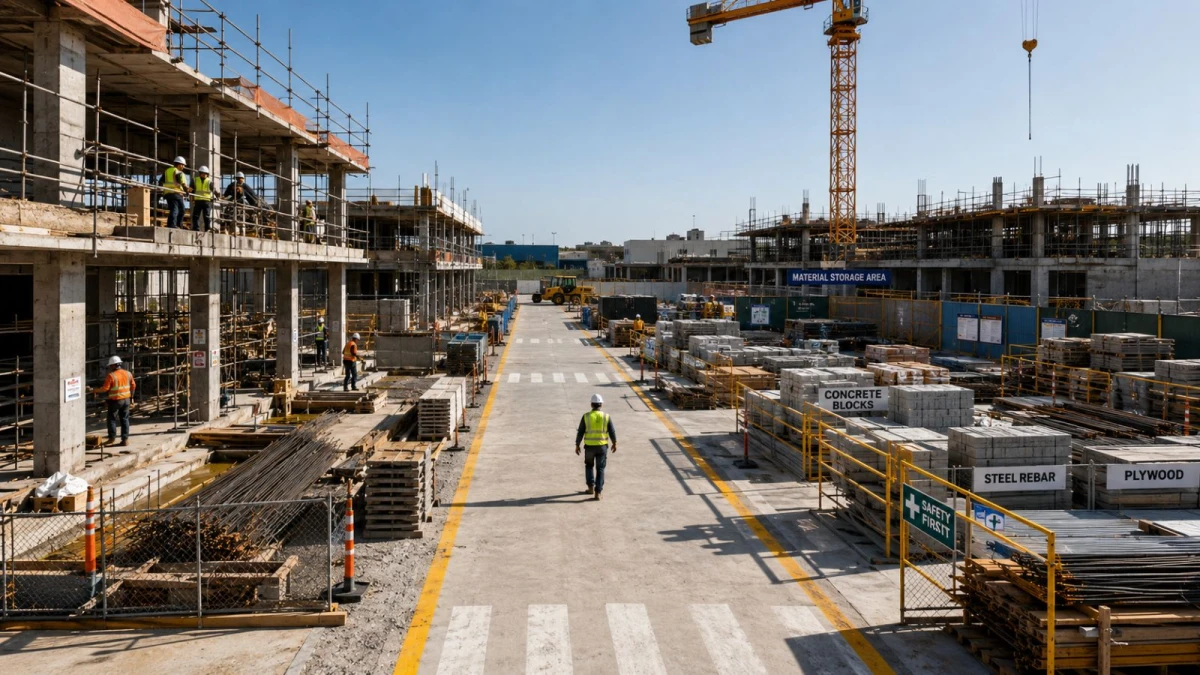
Material Storage Capacity
Don't forget storage. A basic formula for this is:
Storage Capacity = Area × Safe Height
Example: 10m × 5m storage space with 2m safe stacking height = 100 cubic meters of material space.
Good storage keeps materials dry and easy to reach, which supports overall site capacity.
Common Mistakes Beginners Make
- Putting too many workers in a small space
- Poor equipment placement that blocks paths
- Not planning enough storage area
- Ignoring weather or safety zones
Avoid these and your site will run much better.
Tips to Increase Your Site Capacity
- Train workers for better productivity
- Schedule tasks so teams don't overlap too much
- Keep materials delivered just in time
- Use appropriate equipment for the job
- Review progress daily and adjust plans
Small improvements in planning can make a big difference in how fast and safe your project goes.
Conclusion
Calculating construction site capacity doesn't have to be hard. Start with the basic formula, understand your resources, and adjust for real conditions on your site. For beginners, this skill helps you plan smarter, reduce stress, and deliver better projects.
Practice on small tasks first, and over time you'll get confident in managing larger sites too.
Frequently Asked Questions

Prince Badaik Is The Founder And Editor Of Civil Cost. He Writes About Civil Engineering, Construction Techniques, Building Materials, Architecture, Home Improvement, And Infrastructure Developments. His Goal Is To Simplify Complex Construction Topics And Provide Practical Information For Engineers, Contractors, Builders, And Homeowners.

Comments (0)